
Why Agribusinesses Invest on Day One, Before the Company Exists
Four new ventures will pitch on December 11. The companies are new, but the problems behind them have been tested for months.
By Jarrod Sutton, Managing Director, Purdue DIAL Ventures
Most investors meet a company after it’s built. The product is set. The roadmap is taking shape. The founders have a deck, a market-size slide, and a list of customers they hope to land.
By then, some of the most important decisions have already been made. Which problem to solve. Who the customer is. Who will actually pay.
At Purdue DIAL Ventures, those questions get worked through with the industry before a company exists. Our investor partners have a window into that process while the companies are still taking shape.
That's the difference. And it's why I keep coming back to one idea as we head toward Pitch Day on Dec. 11: Day One only happens once.
DIAL Ventures is a venture studio within the Purdue Applied Research Institute. We recruit experienced entrepreneurs as Innovation Fellows, immerse them in agriculture, and work with industry to identify and pressure-test problems worth solving. The Fellows then spend months on customer discovery, challenging assumptions, and determining which opportunities can support real businesses.
DIAL Fund II, our partnership with Grit Road Partners, invests in the companies that emerge. Agribusinesses, cooperatives, food companies, and ag-focused investors invest in the fund rather than a single startup—giving them both strategic proximity to the venture-building process and economic participation in the resulting portfolio.
What Day One looks like
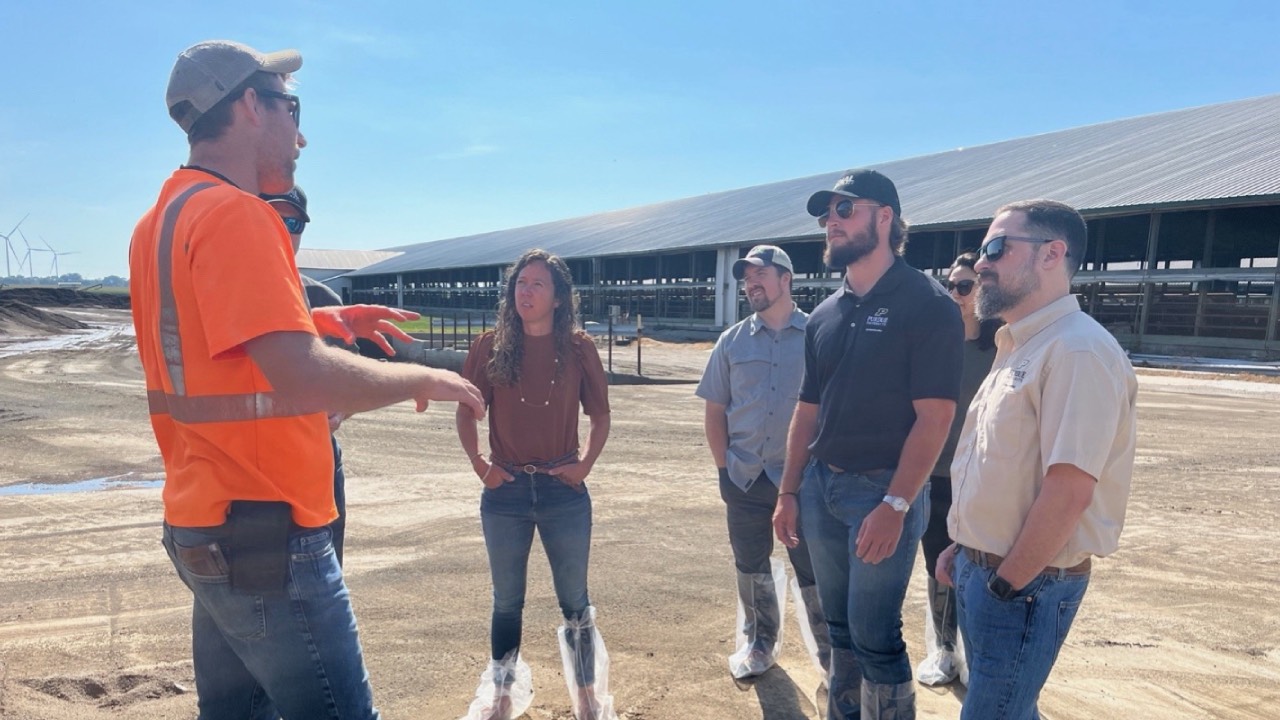
This fall, our Innovation Fellows traveled across five states and sat across the table from producers, processors, agribusiness leaders, and food companies. Hundreds of conversations and months of research ultimately narrowed into eight opportunity areas.
Then we brought those eight to Purdue and invited industry leaders to challenge them. Across 32 breakout discussions, we asked people to tell us where we were wrong. Interestingly, among the skeptical feedback we received, only 2% questioned whether the underlying problem was real.
The harder questions were everything between a real problem and a viable business. Will someone change behavior to solve it? What are they doing today? Who benefits? Who pays? Are the economics compelling enough to drive adoption? Those are exactly the questions we want asked before we build.
I wrote about the seven insights that came out of those rooms here: Agrifood Has Plenty of Challenges. Which Ones Are Worth Building a Business Around?
Four opportunities advanced. Every one of them is sharper because of that scrutiny.
This is what happens before Day One. Before incorporation. Before product. Before the first check.
Our investor partners don’t simply encounter the resulting companies after they’ve been built. They have visibility into the discovery and industry engagement that help shape them while important assumptions are still being tested.
This has worked before
This isn't a theory we're testing for the first time.
Our first fund built a portfolio of companies through this same process. Companies like Croft, Gripp, and Oaken started with an industry problem, were pressure-tested by the people who live it, and are operating with customers today. The portfolio is now valued at more than $30 million, according to PitchBook.
6 studios = 9 companies built with the industry, not for it.
The next iteration of that model is DIAL Fund II, and this time the studio is building AI-first companies. But the sequence matters.
Problem first. Then AI-first.
Technology is moving extraordinarily fast, particularly artificial intelligence. But technology itself isn’t the opportunity. The opportunity is finding an important problem that new technology can now solve differently—and building a business around it.
December 11 is the next catalyst
On December 11, four new ventures emerging from the current studio will pitch at Purdue DIAL Ventures Pitch Day. Shortly after Pitch Day, we expect the first capital from DIAL Fund II to go to work.
For our investors, that marks an important transition: from having visibility into the opportunity landscape and venture-building process to owning an economic interest in the portfolio emerging from it.
And then we begin again. New problems. New discovery. New entrepreneurs. New companies. That’s why the timing matters.
Why agribusinesses engage
Most corporate engagement with startups happens downstream. A company is already formed. A product has been developed. The strategy is largely established.
DIAL gives agribusinesses an opportunity to participate much further upstream.
Strategic visibility. See important industry problems and emerging solutions earlier, informed by Purdue research, industry intelligence, and direct customer discovery.
Upstream participation. Engage with entrepreneurs while they’re still understanding customers, challenging assumptions, and shaping what ultimately gets built.
Economic participation. Invest through DIAL Fund II and own an interest in the portfolio of companies that results.
There’s another benefit as well: optionality.
No agribusiness can stand up an internal innovation team around every emerging problem or technology. DIAL provides a way to explore multiple opportunities alongside Purdue, entrepreneurs, other industry leaders and experienced venture investors—without having to build each capability internally.
That creates a very different relationship with innovation. Instead of waiting to see what someone else builds, you get closer to where the problems and opportunities are first being discovered.
Why now
The opportunity to invest with DIAL Ventures doesn't end in December. But this particular moment does.
Four new ventures are about to emerge. The first Fund II capital is preparing to go to work. And we’re beginning to look toward the problems we’ll pursue next.
Most investors enter after the company exists. DIAL gives agribusinesses an opportunity to participate before the company, before the product, and before many of the important assumptions have hardened.
Day One only happens once.
If you’ve been considering DIAL Ventures, this is a particularly good time to start the conversation.
Interested in investing alongside us? Let's talk.
Book a 20-minute conversation or email me at suttonjs@purdue.edu.